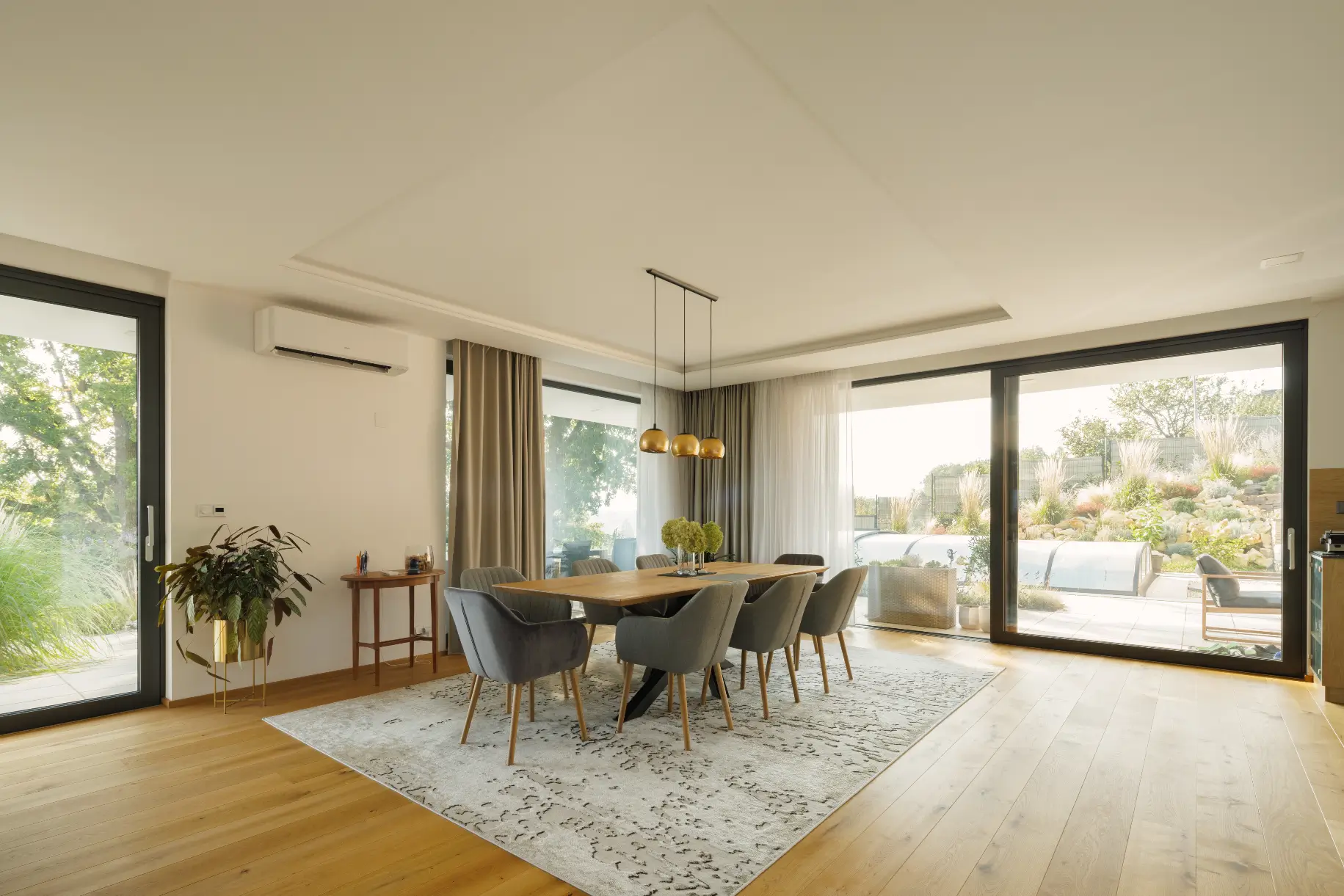
Wood and aluminum do not age the same way. Here is the physical reason.
Wood is a symbol of luxury, but in window frames, it is often used in ways for which it was never designed. The difference between "looks great at handover" and "works after twenty years" is a matter of physics, not taste. Here is what is actually happening to the material and why you can't tell from the handover photo yet.
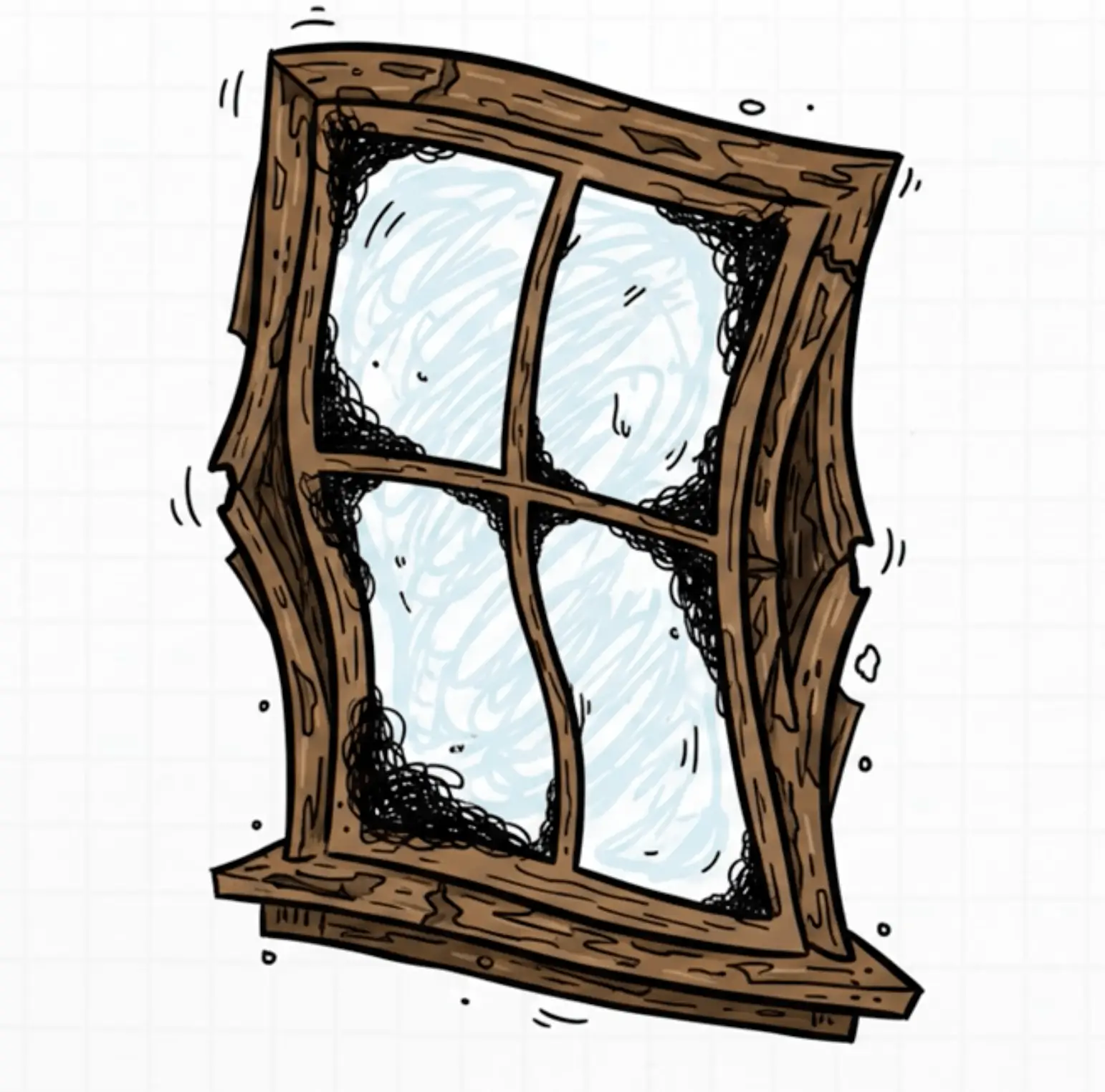
A wooden window is a living material embedded in an inanimate structure. It reacts to moisture, heat, and their fluctuations—and not always in the way an architect or owner would expect. The trouble is that this isn't apparent at first glance. The physics of wood does not reveal itself on the day of handover. It manifests three or seven years later.
The Hidden Problem of Modern Architecture
From the outside, a new window looks flawless—a straight frame, a clean coat of paint, a tight joint. The problem is that this very perfection can conceal what is happening on the inside for several years. Water that penetrates into the joints or under the paint has nowhere to escape in minimalist details with limited ventilation. Material decomposition thus often begins long before it becomes visible on the surface.
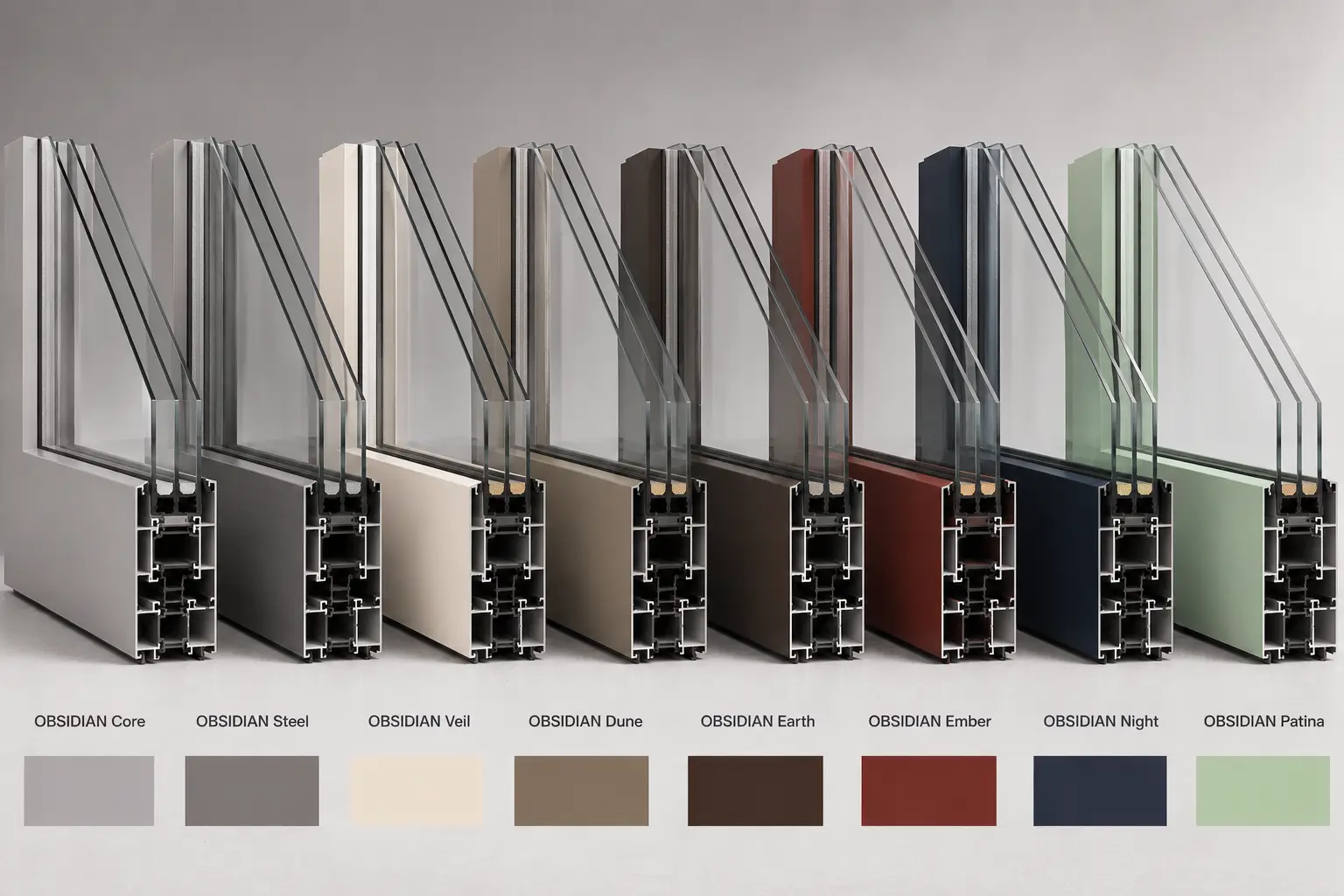
Traditional vs. Modern: Where Did the Overhang Go?
Historic windows survived for decades for one simple reason: the architecture protected them. Deep reveals, an overhanging cornice, or a wooden canopy above the window directed rain and direct sunlight away from the frame. The window was physically shielded from what damages it most.
Modern minimalist facades often eliminate this protection. The window is set flush with the wall, without an overhang, without shielding—and thus fully exposed to the rain and sun that wood traditionally avoided by design. Aesthetics have shifted toward clean lines. However, the physical stress on the material has not decreased as a result—quite the opposite.
Invisible Enemies: Water and Heat
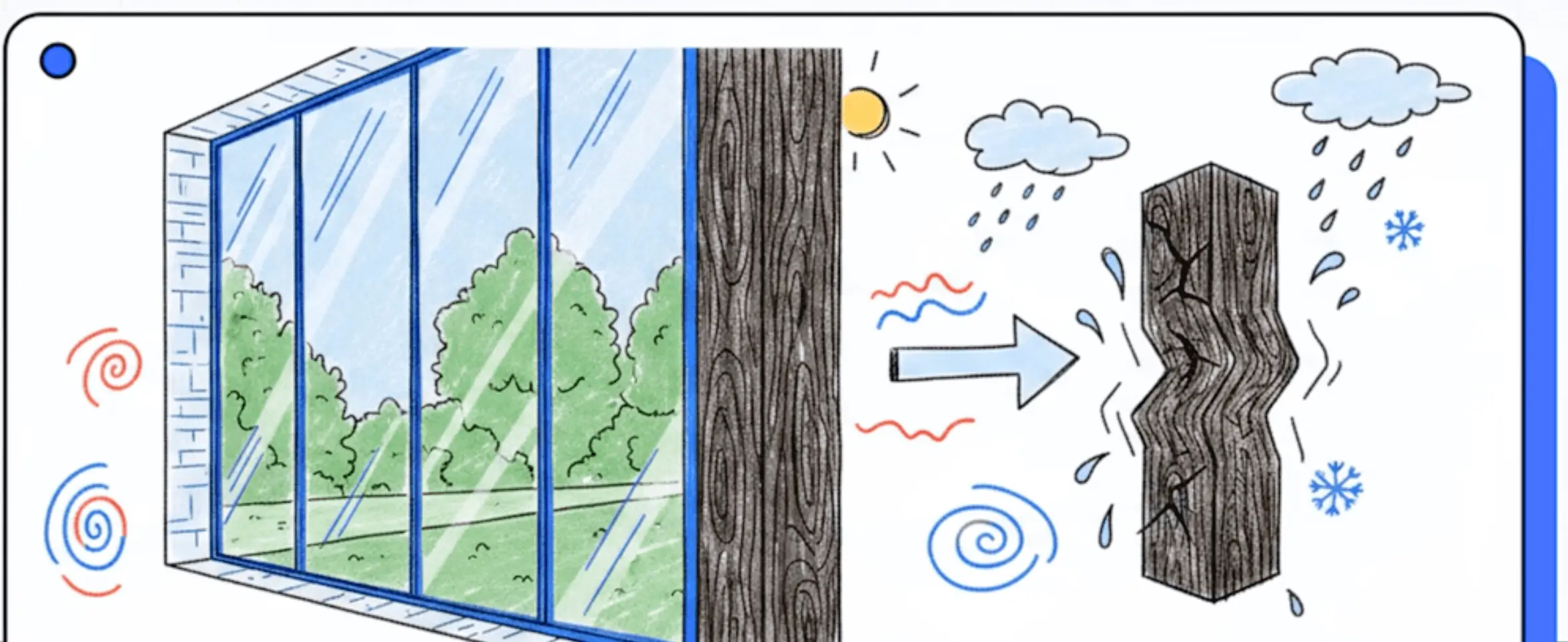
The degradation of a wooden frame follows a predictable, four-step mechanism:
Water ingress. Water penetrates hidden parts of the frame—most commonly into joints, around hardware, or under the paint.
Prevented drying. Sealed modern details with restricted airflow hinder the natural drying of the wood.
Moisture pockets. Without ventilation, water accumulates in enclosed frame cavities, accessible neither to air nor to inspection.
Detail failure. Persistent moisture triggers structural degradation and rot—a process that only accelerates from that point on.
The second mechanism works in reverse, but is just as destructive: the thermal trap. An enclosed detail with massive glazing and a dark frame can locally accumulate extreme heat. In summer, a dark surface in direct sun significantly exceeds the ambient air temperature; seals and joints cyclically expand and contract, and in between, the wood undergoes constant fluctuations of heat and moisture. It is precisely this alternation—not a single extreme value—that fatigues the material the most.
Wood Is a Living Material
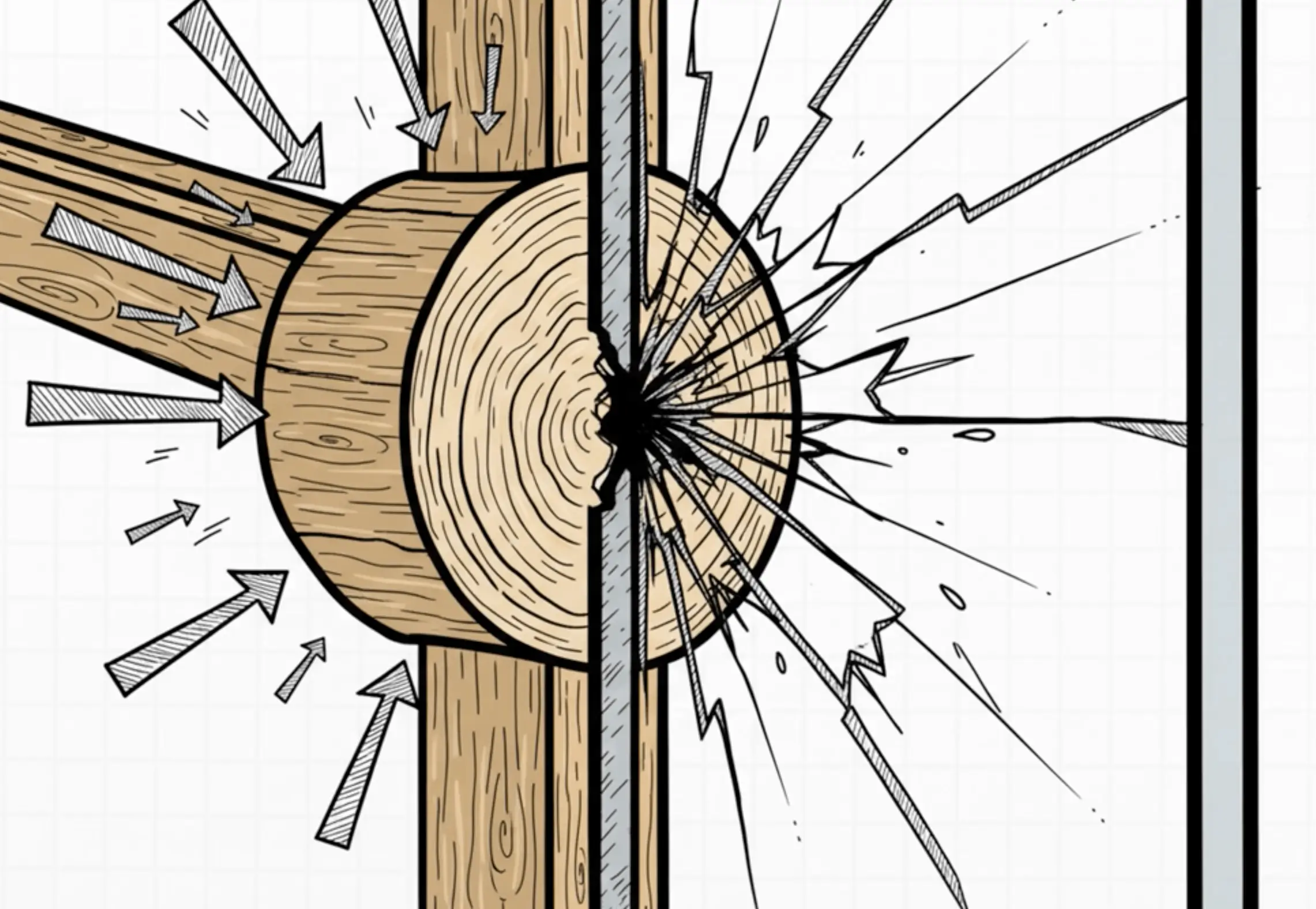
Unlike inert materials, wood changes volume according to air humidity and temperature—and it does not do so uniformly in all directions. Along the grain, it hardly moves at all, but across the grain, even with ordinary seasonal humidity fluctuations, its dimensional change is measured in percentages. That sounds negligible until you realize it happens in a frame engineered to seal against glass and hardware with millimeter precision.
In the corner joint of the frame, stress is exerted simultaneously from multiple directions—the wood attempts to move differently than the geometry of the window permits. The result is cracks not only in the wood, but also in the sealant, the weatherstripping, and sometimes in the glass itself. It is a mechanical toll paid for the fact that the material remains biologically active even after becoming part of a building.
Why We Don't See It Right Away
The most insidious feature of the entire process is its timing. The physics of wood works slowly and quietly—and that is precisely what makes the problem invisible at the moment decisions are made.
Timeline of delayed consequences:
Year 1 | Flawless appearance, visually immaculate first impression |
Year 3 | Hidden moisture retention is quietly underway in enclosed details |
Year 7 | Paint degradation, fogging of insulating glass, first visible defects |
At the moment of handover, years 1, 3, and 7 are physically indistinguishable. The difference only reveals itself with a delay, when repairs are more costly and extensive than prevention would have been. Moreover, sanding and repainting only address the surface—if moisture has already penetrated the structure of the wood, a cosmetic repair will not stop the decay; it will only mask it for a time.
What This Means for Material Selection
The described mechanisms are not a defect of a particular window—they are inherent characteristics of wood as an organic material. They can be slowed down by high-quality paint, careful detailing, and regular maintenance, but they cannot be eliminated. This serves as a useful filter when comparing frame materials—not by their appearance at handover, but by how they behave over time.
PROPERTY | WOOD | ALUMINUM |
|---|---|---|
Response to air humidity | Absorbent, changes volume | Non-absorbent, no swelling |
Dimensional stability | Anisotropic movement over time | Predictable, uniform |
Risk of biological degradation | Rot, mold, wood-boring insects | None – inorganic material |
Behavior during thermal cycles | Cracking of joints and finish | Stable, no material fatigue |
Required regular maintenance | Repainting every 3–7 years | Washing, no repainting needed |
An honest comparison, however, must also mention what aluminum handles less naturally: on its own, it is an excellent conductor of heat, meaning that without an engineered solution it would create a thermal bridge in the frame. In modern systems such as Schüco, however, this is a long-solved engineering problem—a thermal break and insulating chambers within the profile reduce thermal transmittance through the frame to values comparable to high-quality wood, without the frame inheriting wood's issues with moisture, movement, or biological decay.
The difference that matters:
A thermal bridge in aluminum can be solved through technology. The absorbency and biodegradability of wood cannot be solved—they can only be slowed down. That is the fundamental difference between a problem that has an engineering solution and a property that a material possesses by nature.
Conclusion
The question everyone selecting a frame material should ask is simple: are we designing windows for the handover photograph, or to perform for twenty years? Physics has no preferences—it simply reveals itself sooner in a material that struggles against its environment, and later in a material that does not struggle with it at all.
At OBSIDIAN Glass, we rely on Schüco aluminum systems precisely because their behavior after ten or twenty years is just as predictable as on the day of installation. If you are deciding on a frame material for your project, we will gladly discuss the technical parameters of your specific build.