
Frameless windows: when glass takes the leading role in architecture
Frameless windows are changing the way we perceive the boundary between the interior and the outdoors. Instead of a prominent frame, we get glass, light, and clean detail. However, the result is not just a minimalist appearance. Behind truly high-quality frameless glazing lies precise work with the glass, the structure, and its integration into the building itself.
What does a frameless window actually mean?
The term “frameless window” can be slightly misleading. Every large-format glazing needs a structure to safely transfer its weight and load.
The difference lies in how much of this structure is visible in the finished building.
With a classic window, the frame is a prominent part of the opening. In contrast, with a frameless solution, most of the frame is hidden within the structure of the floor, wall, or ceiling. Thus, from the interior, it is primarily the glass surface itself that remains dominant.
This is precisely what makes it possible to create glazed walls with minimal visual barriers and maximum connection between the interior and the surrounding landscape.
Less frame. More architecture.
The purpose of frameless glazing is not to eliminate the frame at all costs. It is about having the technical solution step back in favor of the architecture.
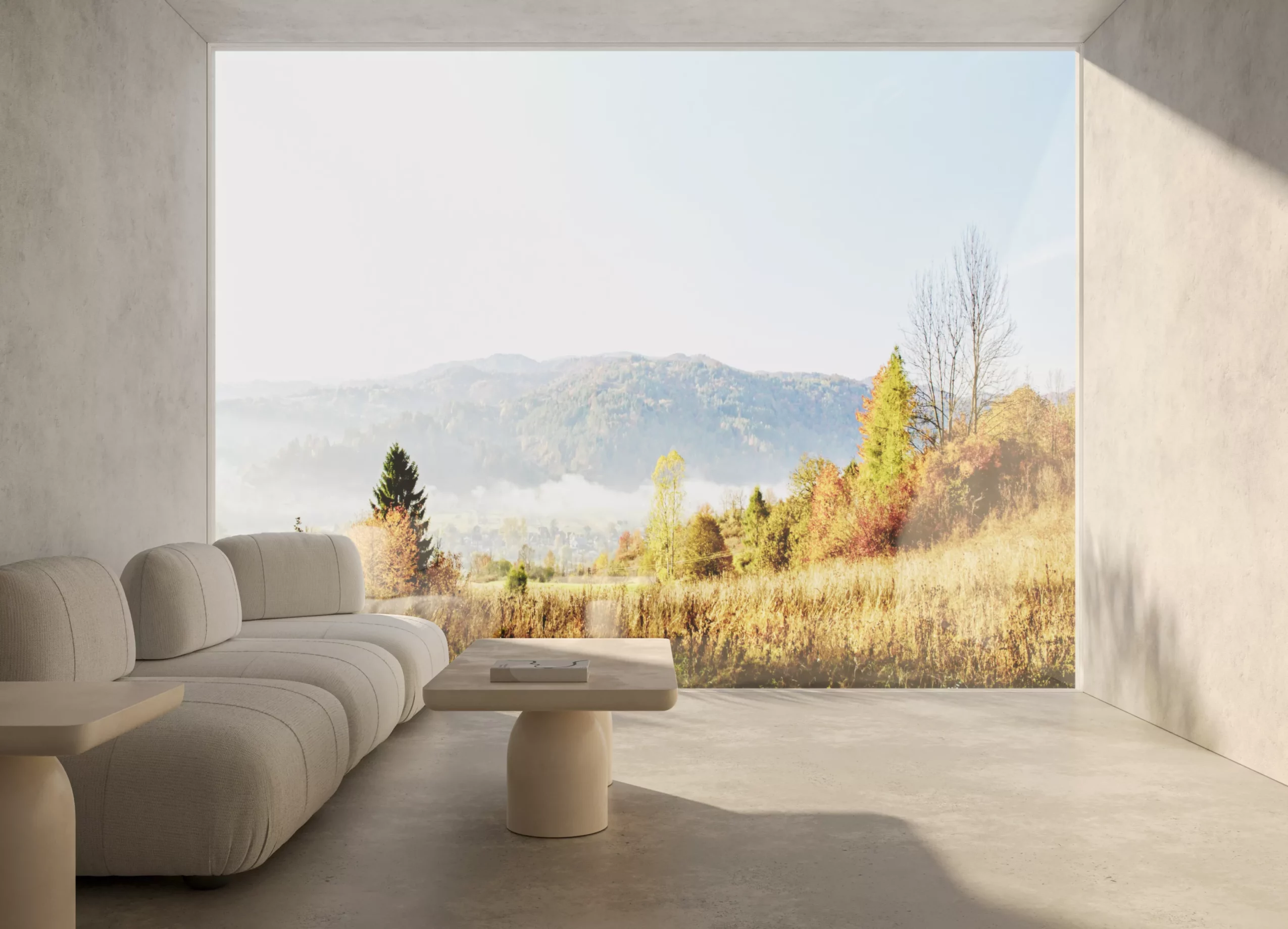
Large glass surfaces bring more natural light into the interior and allow the view to be worked with as an actual part of the space. A window is no longer just an opening in the wall. It can become the entire wall.
This is the reason why frameless and large-format glazing are increasingly appearing in modern family houses, villas, and other architecturally distinctive buildings.
For the architect, they bring greater freedom in design. At the same time, however, they require the glass to be addressed early enough.
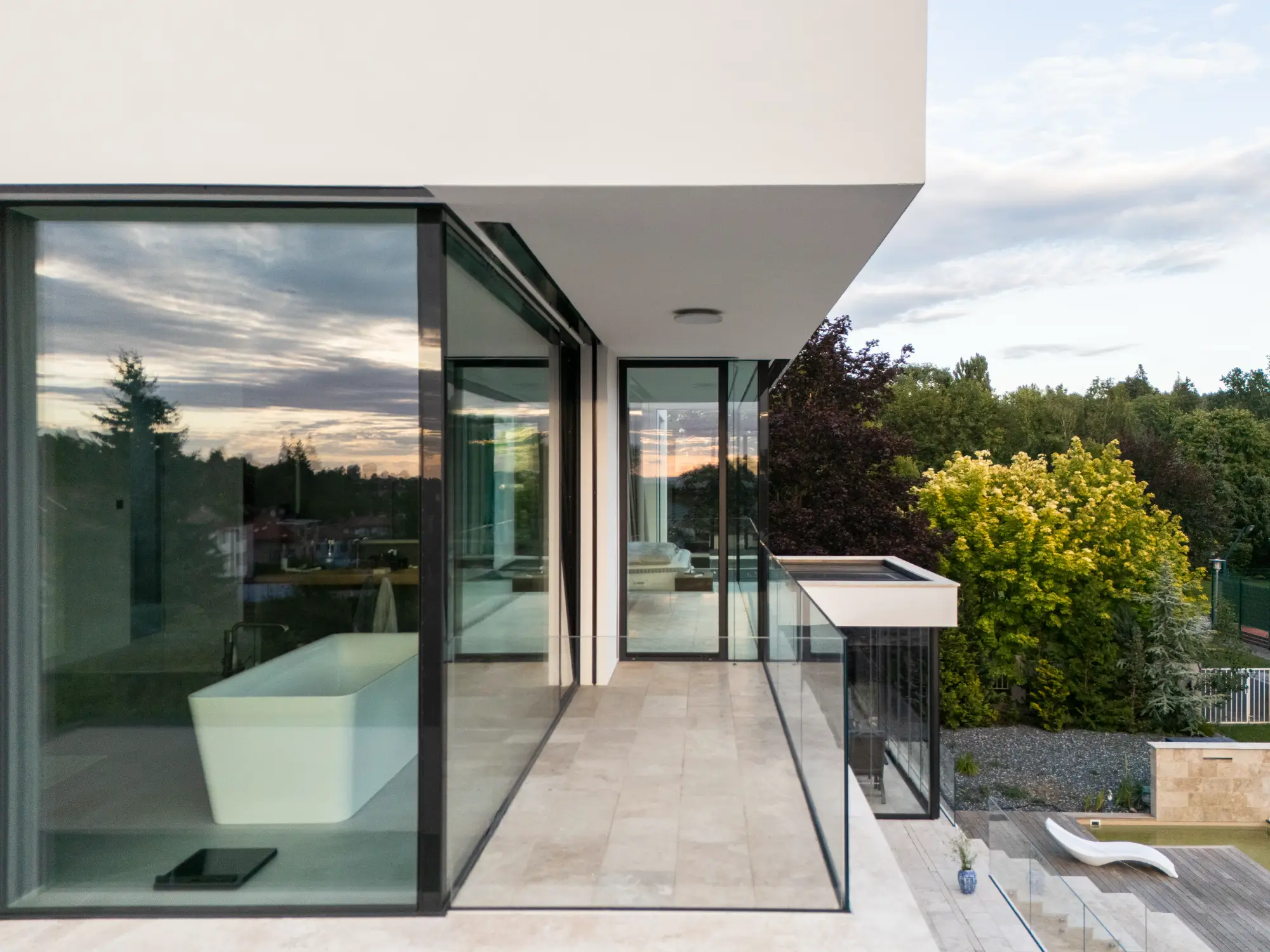
Large glass is not just an enlarged window
As the size of the glass format increases, so do the technical requirements.
A large-format pane can weigh hundreds of kilograms. With truly large structures, we get significantly higher. That is why it is necessary to address not only the glass itself, but the entire system:
dimensions and composition of the insulating glass,
static load,
method of anchoring,
frame design,
connection to the building,
thermal engineering,
transport and handling,
installation method.
This is exactly where the difference between designing a regular window and large-format glazing shows.
OBSIDIAN works with insulating glass up to a format of approximately 6,000 × 3,210 mm, which makes it possible to design truly extensive glazed areas without unnecessary division.
Fixed glazing or sliding portal?
Not every glazed area has to be openable.
On the contrary.
If the glazing is primarily intended to bring light into the interior or open up a view, a large-format fixed window is usually the architecturally cleanest solution.
Fixed glazing allows for very subtle detailing while eliminating a number of mechanical elements required for openable structures.
Where there is a need to connect the interior directly with a terrace or garden, large-format sliding systems come into play.
Modern aluminum HS portals make it possible to combine large moving sashes with fixed glass areas so that the entire unit appears visually uniform.
The result can be a glazed wall several meters wide, a portion of which can be easily opened towards the garden.
Glass matters just as much as the frame
With large-format glazing, it is natural to focus on the subtleness of the profiles. But the frame represents only one part of the outcome.
The glass pane itself is just as important.
Its composition affects thermal insulation, the surface temperature of the glass, acoustics, solar gains, and overall comfort in the room.
That is why OBSIDIAN does not perceive a window merely as a frame with glass. We are primarily glassmakers and approach the design of glazing as a single functional unit.
For projects with large glazed areas, four-layer insulating glass can also be an interesting option. Its purpose is not only to achieve a low heat transfer value, but also to increase the surface temperature of the glass and comfort in the immediate vicinity of the glazing.
The connection detail is decisive
The best frameless glazing is one where you hardly notice the technical solution.
And that is precisely why the detail is the critical point.
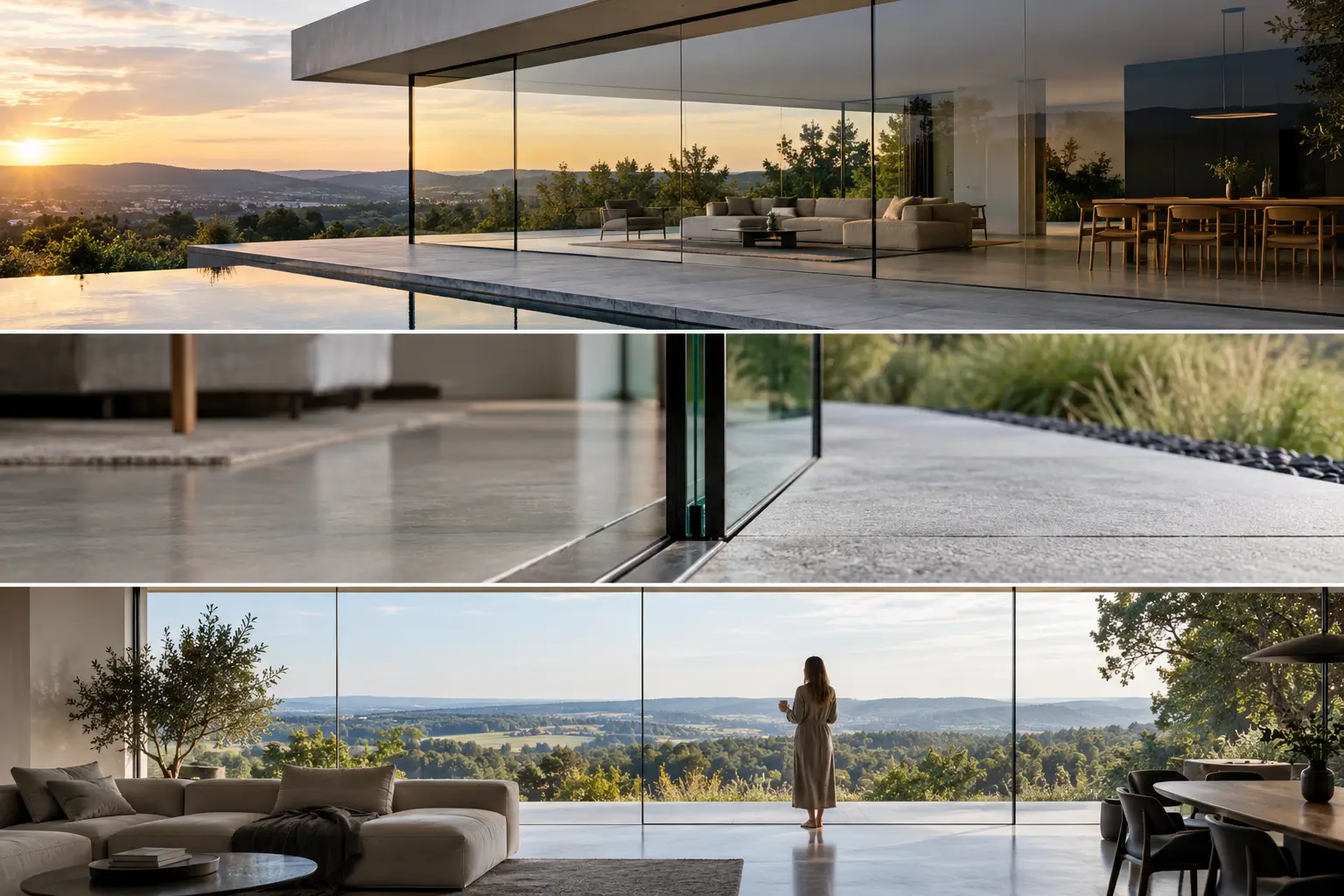
For example, the frame can be partially or almost completely hidden within the floor structure. Its connection to the walls and ceiling can be solved similarly.
From the perspective of the interior, this creates a clean glass surface that can continue practically from floor to ceiling.
For the result to work not only visually but also technically, the connection to the building structure, waterproofing, thermal insulation, and installation must be correctly resolved.
That is why it makes sense to address large-format glazing already in the design phase - not only when the building openings are finished.
The architect should know the solution even before the project is completed
With a standard window, many details can be resolved relatively late. With a glass pane weighing several hundred kilograms, it is no longer that simple.
Ideally, the designer or architect should know in advance:
what the maximum glass size will be,
where the fixed parts will be,
where the sliding portal will be,
how the frame will be embedded in the structure,
how the glass will get to the site.
For large formats, the accessibility of the construction site for handling equipment or the possibility of installing the glass using a crane can be important, for example.
The sooner these questions are resolved, the cleaner the final detail can be.
Large-format glazing in practice
Well-designed frameless glazing does not have to be the dominant feature of the building itself. Often it works in exactly the opposite way.
It lets the architecture, interior, and surrounding environment stand out.
For example, in the realization of the family house Prague–Říčany, we worked with approximately 165 m² of glazed areas. The project also included a frameless large-format fixed skylight and extensive glazing working with minimal visible widths.
View the Prague–Říčany project.
Another example is a family house in Ostrata, where large fixed areas are complemented by sliding systems and the architecture works with a maximum connection of the interior with the surroundings.
View the Ostrata house project.
Frameless glazing starts with a good design
The result of a good design is not a window you notice. It is the view, the light, and the space created thanks to it.
The technology, frame, and construction details are meant to work in the background.
That is exactly where we see the meaning of frameless glazing: minimum visible structure, maximum glass, and the greatest possible freedom for architecture.
Are you dealing with a project featuring large-format glazing?
If you are preparing a family house, villa, or another project with large glazed areas, it pays to consult their solution already in the design phase.
We will help with the choice of glass composition, maximum dimensions, profile system, and the technical detail of the connection to the building.