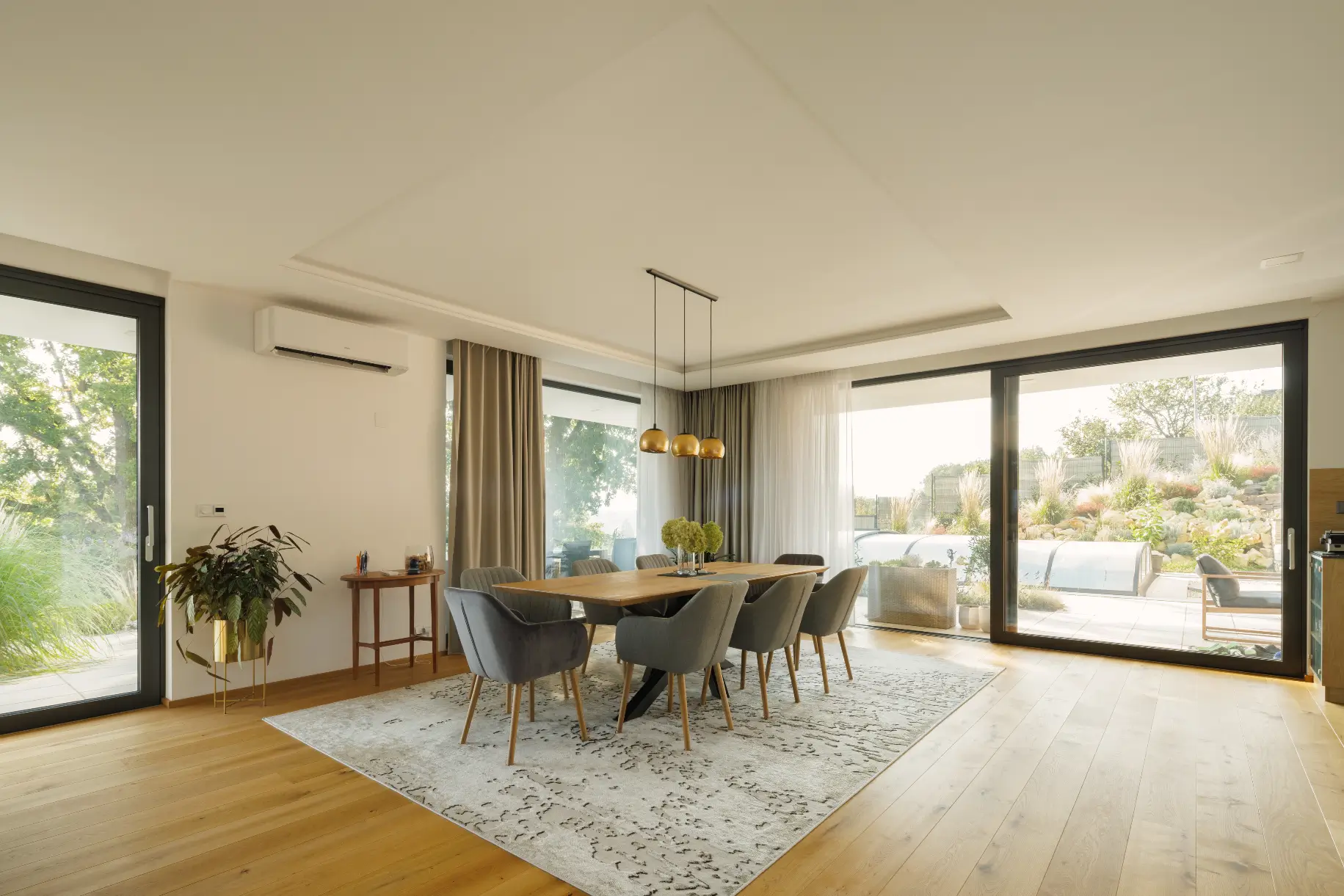
Wood and aluminum do not age the same way. Here is the physical reason.
Wood is a symbol of luxury, but in window frames, it is often used in ways for which it was never designed. The difference between "looks great at handover" and "works after twenty years" is a matter of physics, not taste. Here is what is actually happening to the material and why you can't tell from the handover photo yet.
A wooden window is a living material set into a non-living structure. It reacts to moisture, heat, and their changes - and not always in the way an architect or owner would expect. The problem is that it is not recognizable at first glance. The physics of wood do not manifest on the day the building is handed over. They show up three, seven years later.
The hidden problem of modern architecture
From the outside, a new window looks flawless - a straight frame, clean paint, a tight joint. The problem is that this exact flawlessness can hide what is happening inside for several years. Water that gets into the joints or under the paint has no way to escape in minimalist details with limited ventilation. The decomposition of the material thus often begins before it is visible on the surface.
Traditional vs. modern: where did the canopy go
Historical windows survived for decades for one simple reason: architecture protected them. A deep reveal, an overhanging cornice, or a wooden canopy above the window diverted rain and direct sunlight away from the frame. The window was physically shielded from what damages it most.
Modern minimalist facades often remove this protection. The window is set flush with the wall, without overhang, without shielding - and therefore fully exposed to rain and sun, which wood previously avoided by principle. Aesthetics have shifted towards clean lines. However, the physical load on the material has not decreased as a result - on the contrary.
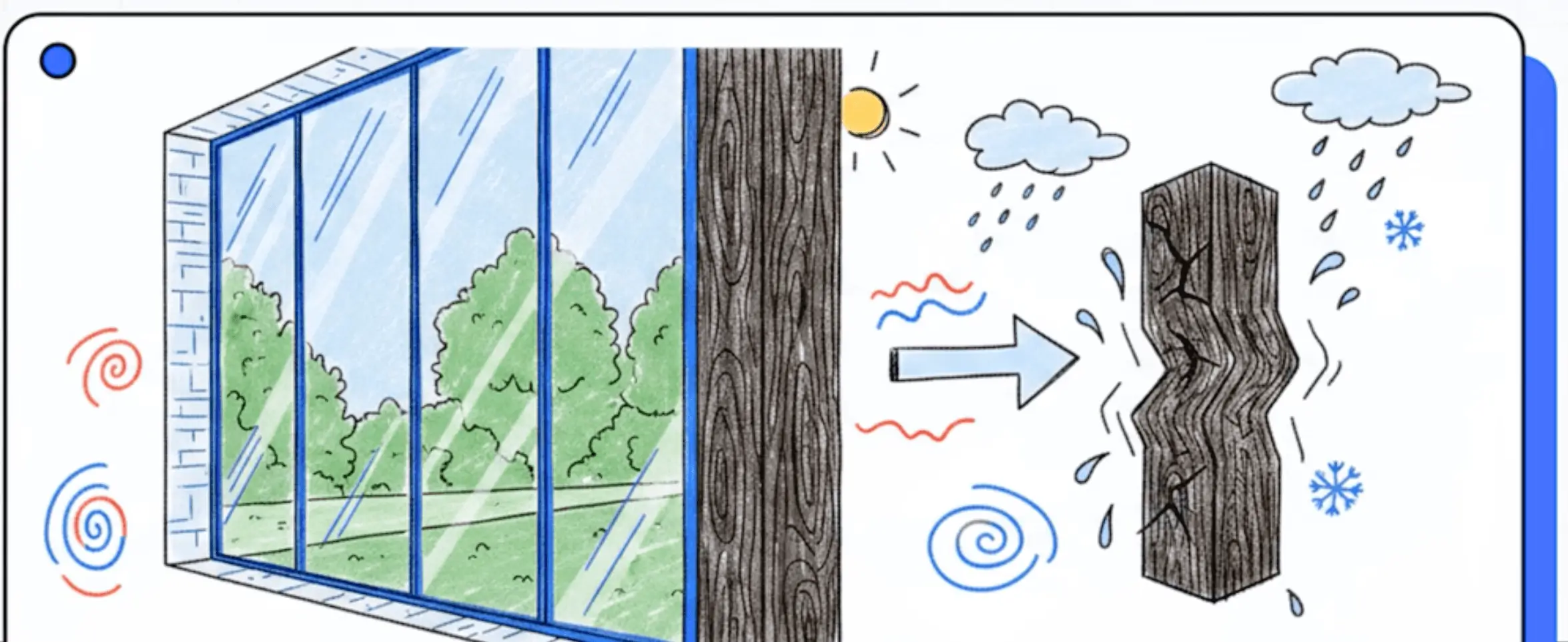
Invisible enemies: water and heat
Degradation of a wooden frame has a predictable, four-step mechanism:
Water penetration. Water leaks into hidden parts of the frame - most commonly into joints, around fittings, or under the paint.
Prevention of drying. Sealed modern details with limited air flow prevent the natural drying of the wood.
Moisture pockets. Without ventilation, water accumulates in closed cavities of the frame, where neither air nor inspection can reach.
Detail decay. Permanent moisture triggers structural degradation and rot - a process that only accelerates from there.
The second mechanism works in reverse but is just as destructive: the thermal trap. A closed detail with massive glazing and a dark frame can locally accumulate extreme heat. A dark surface in summer sun significantly exceeds the ambient air temperature, seals and joints cyclically expand and contract, and the wood in between undergoes a constant alternation of heat and moisture. It is this alternation - not a single extreme value - that fatigues the material the most.
Wood is a living material
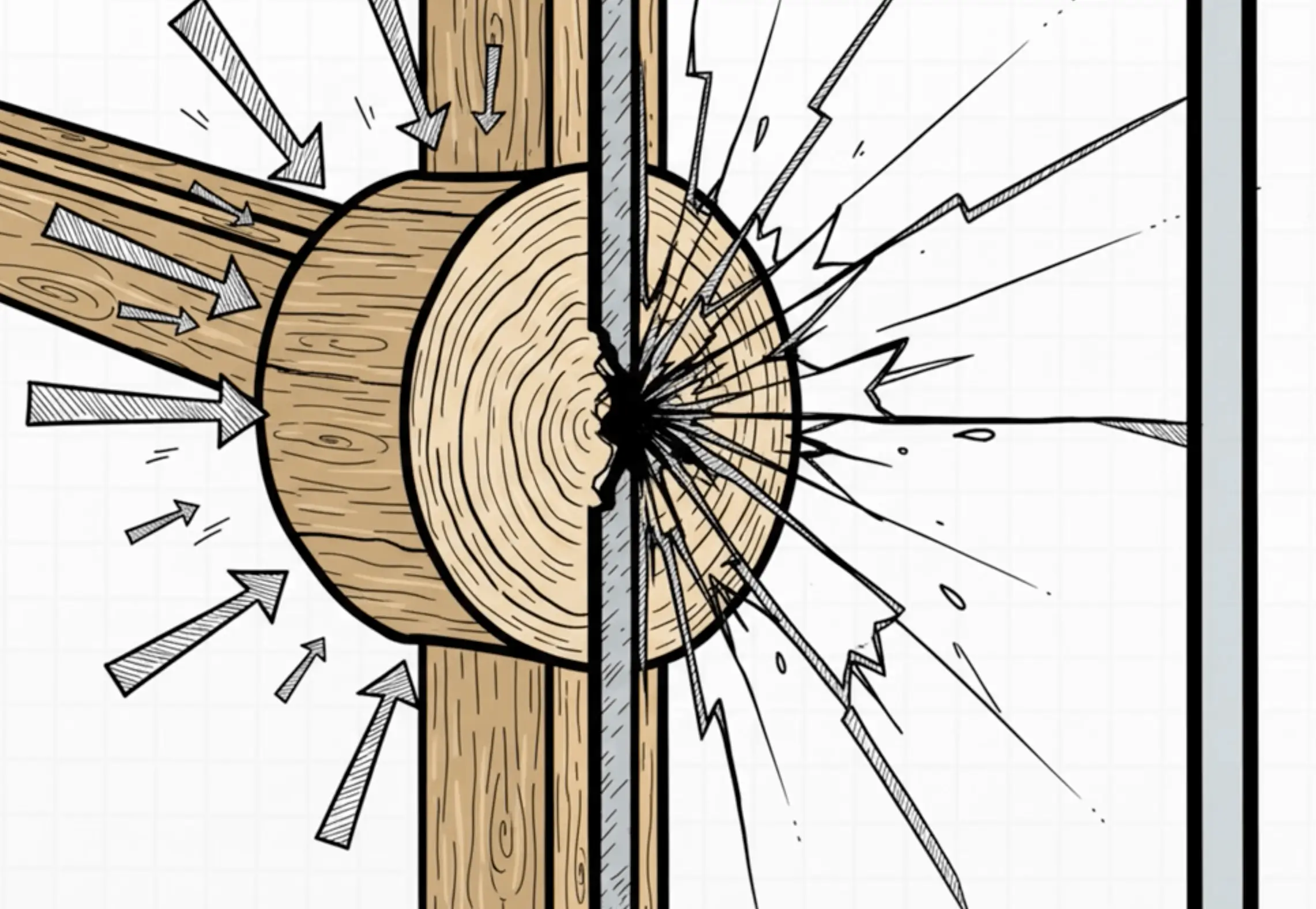
Unlike inert materials, wood changes volume according to air humidity and temperature - and it does not do so evenly in all directions. It practically does not move along the grain, but across the grain, even during normal seasonal fluctuations in humidity, its dimensional change is measured in percentage units. That sounds like little until you realize that this happens in a frame that must fit to the millimeter precisely against the glass and the fittings.
In the corner joint of the frame, tension thus acts simultaneously from multiple directions - the wood tries to move differently than the geometry of the window allows. The result is cracks not only in the wood, but also in the sealant, seal, and sometimes even in the glass itself. It is a mechanical tax for the material being biologically active even after it has become part of the structure.
Why we don't see it immediately
The most insidious feature of the whole process is its timing. The physics of wood work slowly and quietly - and that is precisely what makes the problem invisible at the moment of decision-making.
Timeline of delayed consequences:
Year 1 | Perfect appearance, visually flawless first impression |
Year 3 | Hidden moisture retention is silently taking place in closed details |
Year 7 | Degradation of paint, fogging of double glazing, first visible faults |
At the moment of handing over the building, years 1, 3, and 7 are physically indistinguishable. The difference only shows up with a delay when repair is more expensive and extensive than prevention would have been. Moreover, sanding and a new coat of paint only solve the surface - if moisture has already penetrated the structure of the wood, a cosmetic repair will not stop the decay, only cover it up for a time.
What this implies for the choice of material
The described mechanisms are not a defect of a specific window - they are properties that inherently belong to wood as an organic material. They can be slowed down by high-quality paint, detail, and maintenance, but not eliminated. This is a useful filter for comparing frame materials - not by appearance upon handover, but by how they behave over time.
PROPERTY | WOOD | ALUMINUM |
|---|---|---|
Reaction to air humidity | Absorbent, changes volume | Non-absorbent, no swelling |
Dimensional stability | Anisotropic movement over time | Predictable, uniform |
Risk of biological degradation | Rot, mold, wood-boring insects | None - inorganic material |
Behavior during thermal cycles | Cracking of joints and paint | Stable, no material fatigue |
Required regular maintenance | Paint every 3–7 years | Washing, no painting required |
A fair comparison must also mention what aluminum solves less naturally: by itself, it is an excellent conductor of heat, so without a design solution, it would create a thermal bridge in the frame. In modern systems like Schüco, however, this is a long-solved engineering problem - a broken thermal bridge and insulation chambers in the profile reduce heat transmission through the frame to values comparable with quality wood, without the frame taking on wood's problems with moisture, movement, or biological degradation.
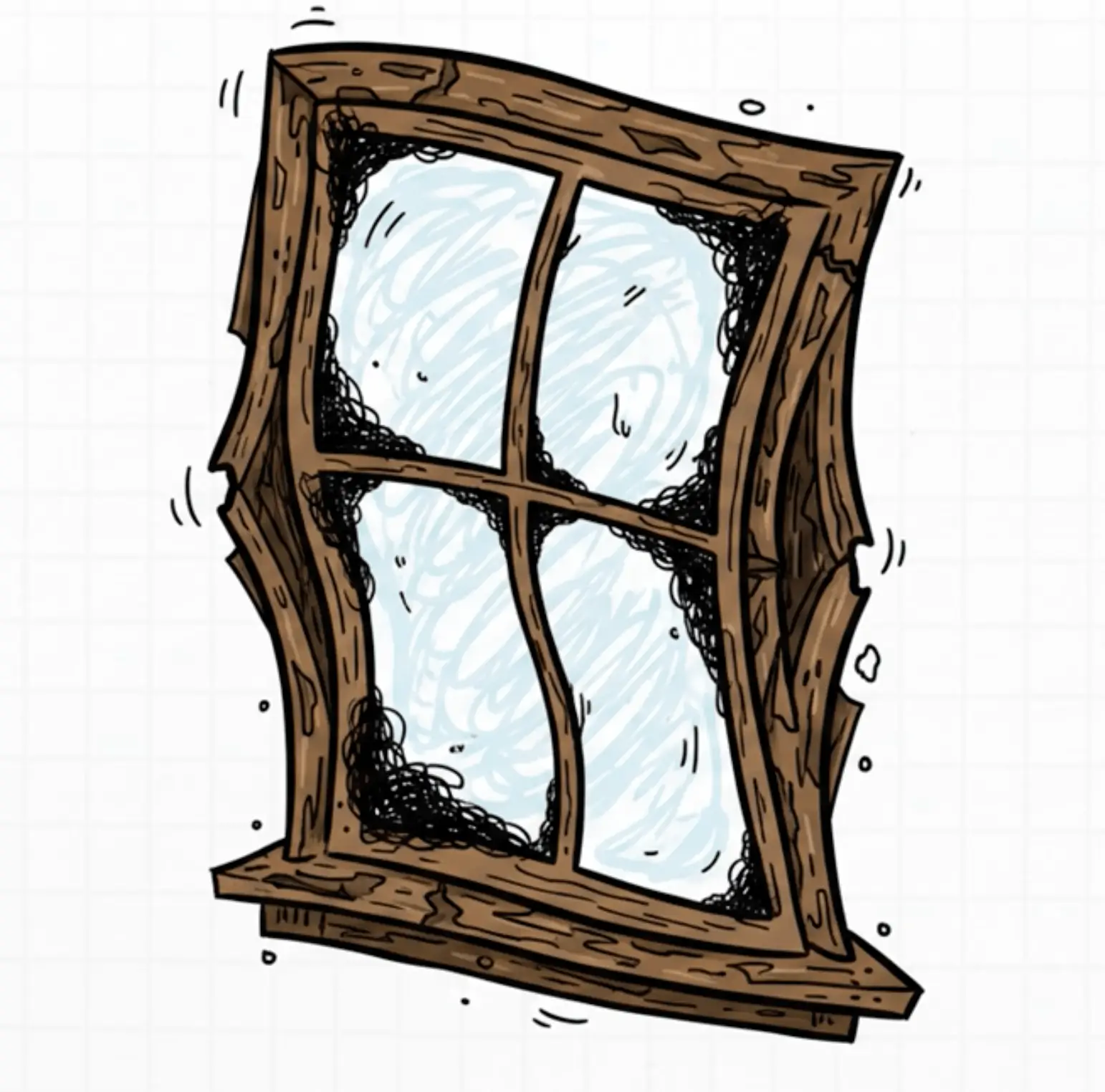
The difference that matters:
A thermal bridge in aluminum can be solved with technology. The absorption and biodegradability of wood cannot be solved - they can only be slowed down. This is the crucial difference between a problem that has an engineering solution and a property that the material has by nature.
In conclusion?
The question that everyone choosing a frame material should ask themselves is simple: do we design windows for a photo from the handover, or so that they function for twenty years? Physics does not have preferences - it just manifests earlier with a material that fights the environment, and later with a material that does not fight it at all.
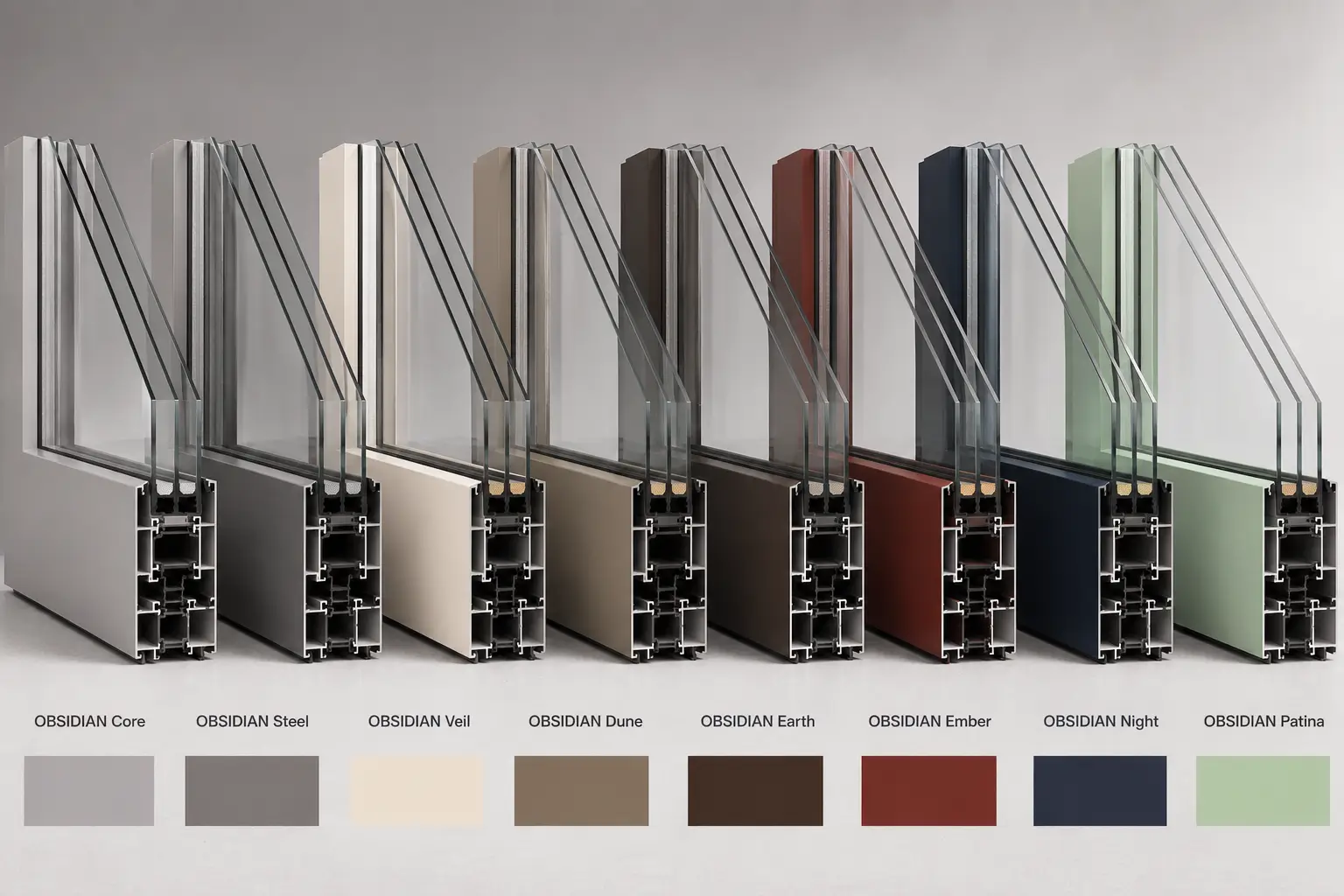
At Obsidian Glass, we build on Schüco aluminum systems precisely because their behavior after ten and twenty years is just as predictable as on the day of installation. If you are dealing with the frame material for your project, we would be happy to discuss the technical parameters of your specific building.