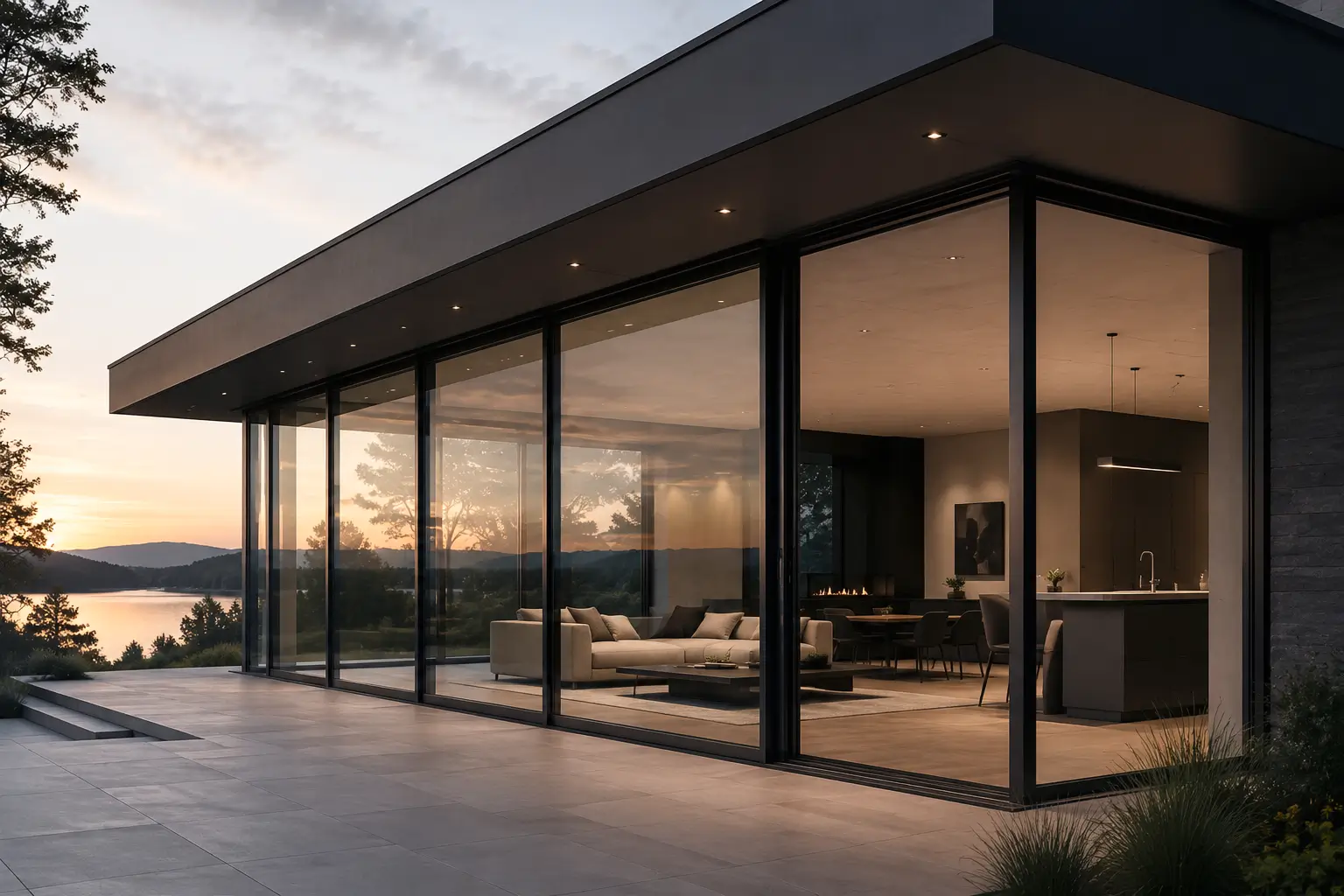
Aluminum windows: why they are becoming the standard for premium buildings
Wood and plastic have their place. But where a window needs to last for decades without degradation, support large panes of glass, and keep its slim frame even after twenty winters, aluminum proves to be the material with the fewest compromises. Here is a comparison - minus the marketing, with technical reasons.
For a long time, the choice of window material in the Czech Republic was decided mainly by price: plastic for budget, wood for a traditional look, aluminum for architecture. This boundary is collapsing. Today, insulated aluminum profiles achieve the same thermal parameters as wood and plastic, while offering something that neither of them can - a long-term stable frame regardless of weather, humidity, or years of operation.
Three materials, three different aging curves
The key difference between aluminum, wood, and plastic is not in what the window looks like on the day of installation - today, all three materials can compete with each other. The difference is in what they look like after fifteen years of operation.
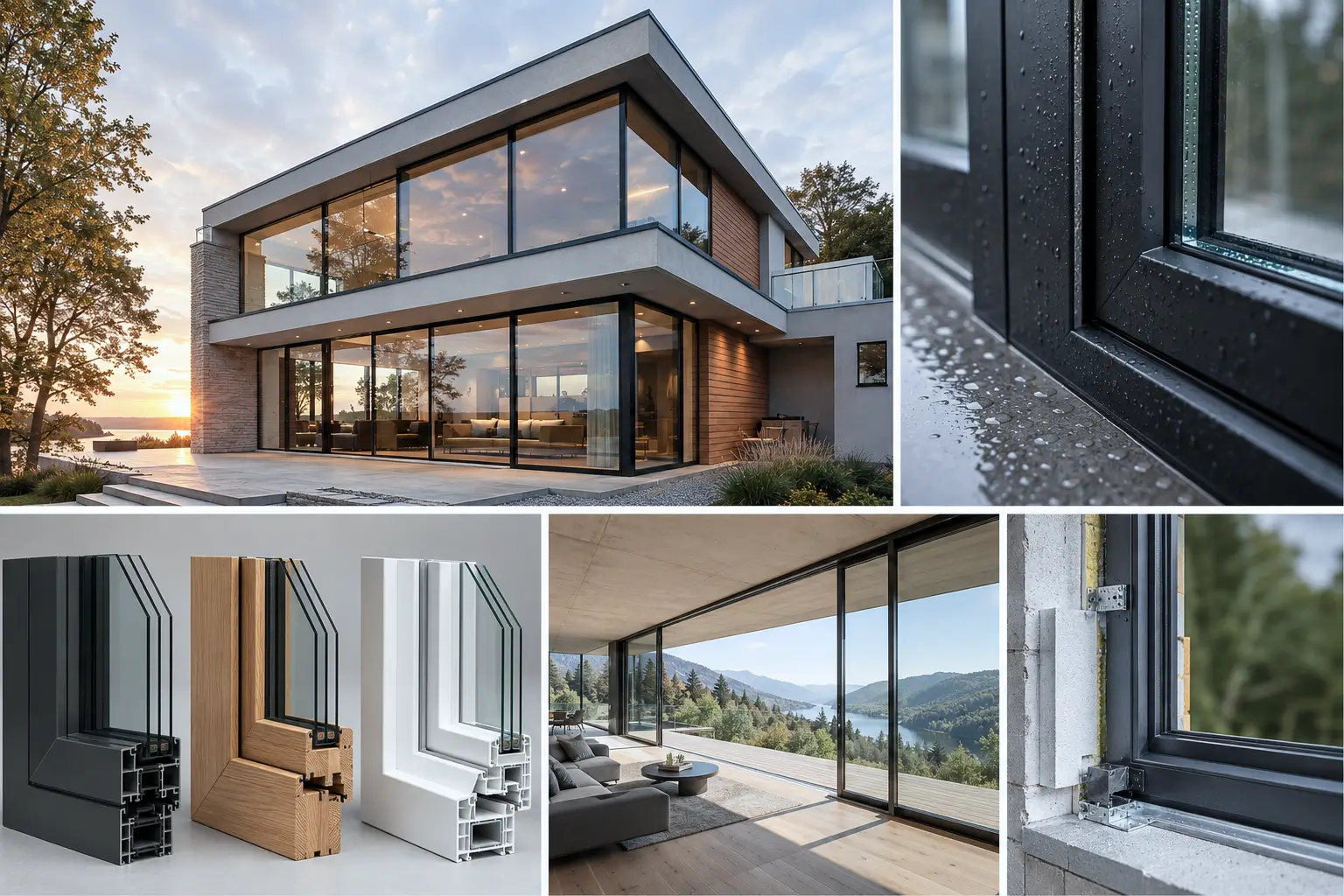
Wood works with moisture. It absorbs it and releases it again, changes its dimensions, and without regular maintenance - painting or glazing every 3–7 years - it starts to crack, lose the tightness of joints, and rot in exposed areas (sills, bottom edges of sashes). Plastic (PVC) is more resistant to moisture, but degrades under UV radiation: the profile gradually turns yellow, the surface becomes brittle, and in darker decors, it also expands more with heat, which causes bowing in large formats. Aluminum does not corrode, does not rot, and UV radiation practically does not damage its anodized or powder-coated surface (Qualicoat) - dimensional stability remains the same in the first and twentieth year.
Criterion | Aluminum | Wood | Plastic (PVC) |
|---|---|---|---|
Lifespan without major intervention | 40–50+ years | 25–40 years* | 20–30 years |
Regular surface maintenance | Not required | Paint / glaze every 3–7 years | Minimal |
Dimensional stability (humidity, heat) | High | Low - swells, shrinks | Medium - thermal expansion |
UV resistance / surface aging | High (Qualicoat) | Medium, depends on coating | Low - yellowing, embrittlement |
Load-bearing capacity for large-format glazing | High | Limited without reinforcement | Limited, steel reinforcement required |
Frame width / proportion of glazed area | Slimmest | Medium | Widest |
Behavior in fire | Does not burn, does not melt | Flammable | Softens, releases fumes |
Recyclability | Fully recyclable | Limited (coatings, glues) | Limited, more demanding process |
*The lifespan of wood strongly depends on the quality of the timber, treatment, and consistency of maintenance - without it, the real lifespan is significantly shortened.
Where wood hits its limits
Wood has undisputed aesthetic value and good thermal insulation properties of the material itself. The problem is not wood as such, but what the outdoor environment does to it:
Maintenance is not optional. A neglected coating means moisture penetrating into the fibers, and from there it is a short way to rot and loss of tightness - especially in the case of sills and bottom edges of sashes exposed to rain.
Working with moisture = material movement. Wood swells and shrinks with the seasons. With older wooden windows, this is noticeable in sashes that "bind" in summer and have gaps in winter.
Load-bearing capacity for large panes. Modern architecture demands larger and larger glazed areas. A wooden frame needs a larger cross-section for this, which limits both the appearance and the proportion of the glazed area.
Where plastic (PVC) hits its limits
Plastic mainly solved affordability and low maintenance compared to wood - and it fulfilled its role in that. But its weaknesses show up precisely in the time horizon for which houses are built today:
UV degradation. Years of sunlight make the profile brittle and, in the case of darker decors, cause visible yellowing and loss of gloss - especially noticeable on southern facades.
Thermal expansion. PVC expands significantly more than aluminum. With dark color foils and longer profiles, this leads to bowing in summer temperatures and visible bending of individual sashes in large areas.
Steel reinforcement as a crutch. In order for a plastic frame to support larger panes, it needs internal steel reinforcement. The load-bearing capacity is then provided not by the plastic, but by the steel inside it - and the profile remains bulkier.
Limited repairability. A damaged or yellowed plastic profile can practically not be repaired on the surface - the solution is to replace the part or the entire sash.
Thermal insulation is no longer an argument against aluminum
The most common objection to aluminum is: "aluminum conducts heat, it will be a cold window." This was true for profiles without a thermal break, which are practically no longer used by quality manufacturers today. Modern aluminum profiles with a built-in polyamide thermal barrier (e.g. Schüco AWS 75 and AWS 90) achieve a Uw of the entire window below 0.8 W/m²K - parameters comparable to high-quality wood and plastic.
The difference in insulation between materials today is therefore mainly in the glass and installation, not in the frame itself. We have discussed more about the impact of glazing composition on the heat balance in the article Quadruple vs triple glazing: the real difference in heating costs.
Where aluminum shows its main advantage
The high strength-to-weight ratio allows for significantly slimmer profiles in aluminum than in wood or plastic while maintaining the same or higher load-bearing capacity. This has two practical consequences: more daylight with the same structural opening and the possibility of realizing large-format glazing and sliding doors, where wood and plastic would need a substantially more massive (and therefore less light-transmitting) design. We described this in more detail in the article about large-format glazing.
Our position: Both wood and plastic have a good place in certain projects — wood where consistent maintenance is a matter of course and the aesthetics of a solid frame are desired, plastic where the lowest purchase price is decisive. However, for buildings with a outlook of decades, large-format glazing, or facades with high demands on precision, we today recommend aluminum as the default choice — it is a material that retains its day-one parameters after twenty years of operation.
To conclude, why aluminum then?
The question "wood, plastic, or aluminum" used to be decided mainly by budget. Today, when houses are built with a prospect of 40 or more years and architecture demands larger and larger glazed areas, other criteria come to the fore - dimensional stability, load-bearing capacity, and how the material looks and performs after fifteen winters, not just on the day of handover. In these criteria, aluminum has the fewest compromises of all three materials.
Send us your floor plan or just an idea of the size of the glazed areas. We will advise you where the Schüco aluminum profile is most worthwhile and prepare a non-binding quotation.