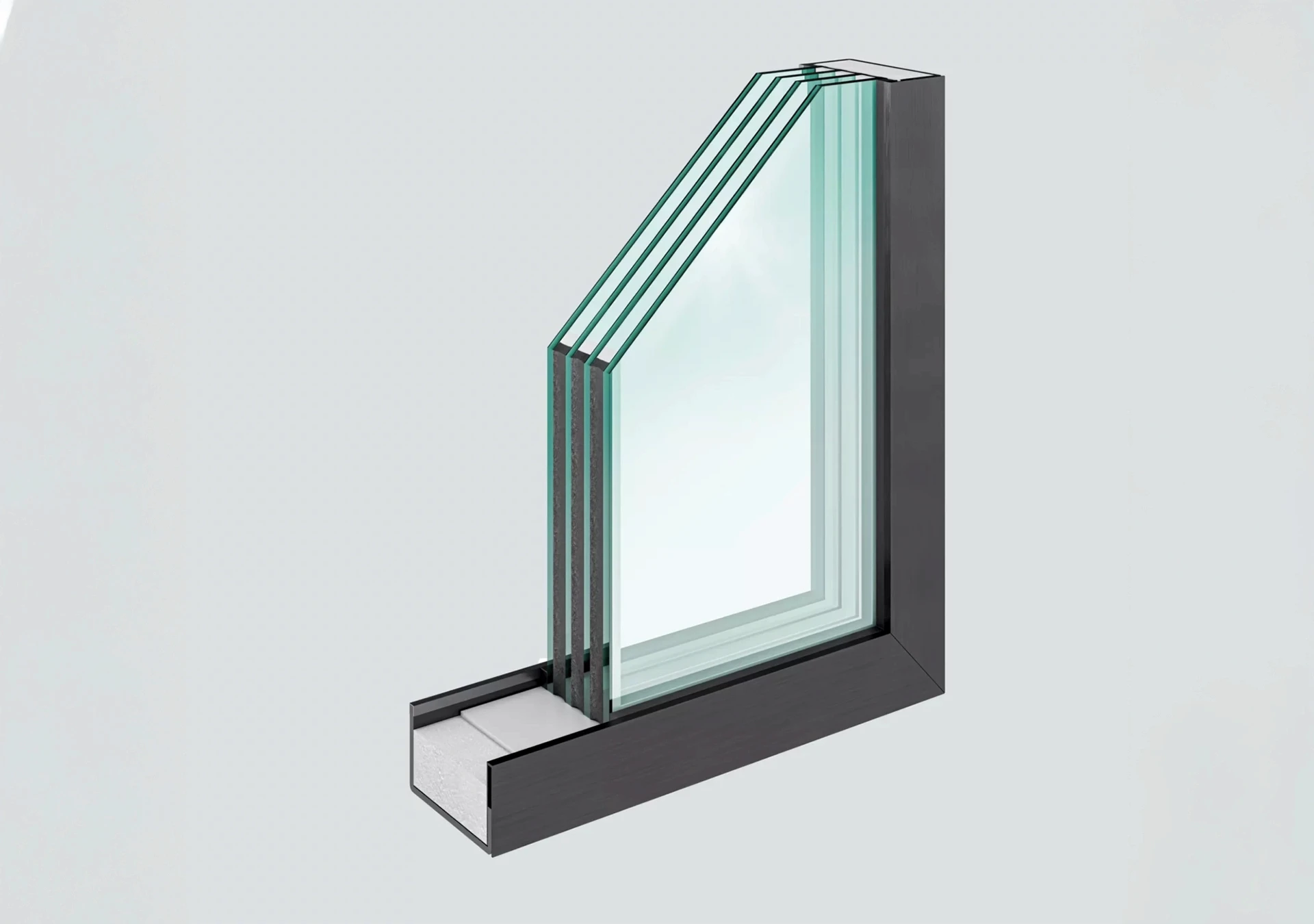
Quadruple vs triple glazing: what is the real difference in heating costs?
Quadruple glazing is not a luxury for passive houses - it is a new standard for buildings designed to serve for the next forty years. Here are the numbers, parameters, and reasons why we choose Obsidian Glass quadruple glazing for premium installations.
Triple glazing has been the standard for the last fifteen years. In an era of more expensive energy, stricter regulations, and homes designed for a forty-year lifespan, however, the role of the window is changing. Quadruple glazing Ug 0.3 W/m²K does today what triple glazing did in 2010 - it pushes the boundaries of what is possible for a window.
What makes quadruple glazing different
Triple glazing consists of three panes of glass and two gas spaces filled with argon (Obsidian Glass) or krypton. Premium triple glazing achieves Ug 0.5 W/m²K - which was the passive standard until recently. Quadruple glazing adds a fourth pane and a third gas space filled with argon and two soft-coated surfaces. It reaches Ug 0.3 W/m²K, which represents a 40% lower heat loss. This is no longer a cosmetic improvement. This is a generational leap in parameters.
Model calculation of savings
To stick to numbers that can be verified: we calculate the savings on heat transmission through the glazing alone in a typical family house. Inputs are intentionally chosen soberly, without taking solar gains and infiltration into account.
For houses with larger glazing areas or with panoramic windows - which are typical projects we work on - the numbers multiply proportionally. A passive house with 50 m² of glazing will save over CZK 4,000 per year today. Thus, the energy difference of one glazing gradually exceeds the purchase premium of quadruple glazing.
Glazing area | 100 m² |
Average temperature difference | 16 °C |
Standard triple glazing Ug | 0.6 W/m²K |
Obsidian quadruple glazing Ug | 0.3 W/m²K |
Energy price | 8 CZK / kWh |
Annual savings on heating | 32,180 CZK |
Savings over 30 years | 1,531,100 CZK |
Where the difference is felt more than in money
The energy bill is the first argument. The second - and often more important for everyday life - are three things that the Ug table does not show:
Surface temperature of the glazing. At an outdoor temperature of -10 °C, the inner surface of quadruple glazing is 1.5-2 °C warmer than triple glazing. This means an end to the cold radiation near the window. The room can be used right up to the glazing - even with panoramic windows, where with triple glazing a cold feeling persisted.
Condensation and mold risk. Higher surface temperature practically eliminates condensation on the inner side of the glass. The typical morning problem in bedrooms and children's rooms, where moisture from breathing condensed on the coldest spot in the room, disappears.
Acoustics. Quadruple glazing with asymmetrical pane thicknesses achieves attenuation 3-5 dB better than symmetrical triple glazing. This is not a minor detail for noise perception - it is a noticeable difference between a "residential street" and a "quiet street".
When to choose Obsidian quadruple glazing
Situation | Triple glazing UG 0.5 | Quadruple glazing UG 0.3 |
|---|---|---|
New build with low-energy level ambition | Minimum | Recommended |
Passive house or certification | Borderline | Standard |
Large windows and panoramic glazing | Limited | Recommended |
Noisy location (road, railway track) | Limited | Recommended |
Mountain climate < -15 °C | Sufficient | Recommended |
Investment with a 30+ year outlook | Compromise | Standard |
Why Obsidian glass quadruple glazing
Glass is just one parameter. A window is a system. We install our quadruple glazing in Schüco AWS 75 and AWS 90 profiles with a warm spacer bar in an out-of-wall installation within the insulation - in an environment where the quadruple glazing can truly demonstrate its parameters. Without this, any extra pane is useless.
Warm spacer Swisspacer Ultimate on the edge of each pane - no condensation.
Argon in the gas spaces, two soft-coated surfaces, asymmetrical thicknesses for acoustics.
Out-of-wall installation at the level of the facade insulation - without it, Ug 0.3 glazing loses half of its advantage.
QR traceability of each element - you get an exact specification, not just a promise.
Conclusion
In 2010, triple glazing represented a shift that only became established in the Czech Republic after ten years. Quadruple glazing is in the same position today - technically advanced, economically defensible for homes with ambition, but still underappreciated in the mainstream market.
If you are building a house that is meant to last, this is a choice you cannot change later. Send us your project or just the dimensions and orientation of the windows. We will calculate the savings specifically for your house and propose Obsidian quadruple glazing in the variant that makes sense for your building.