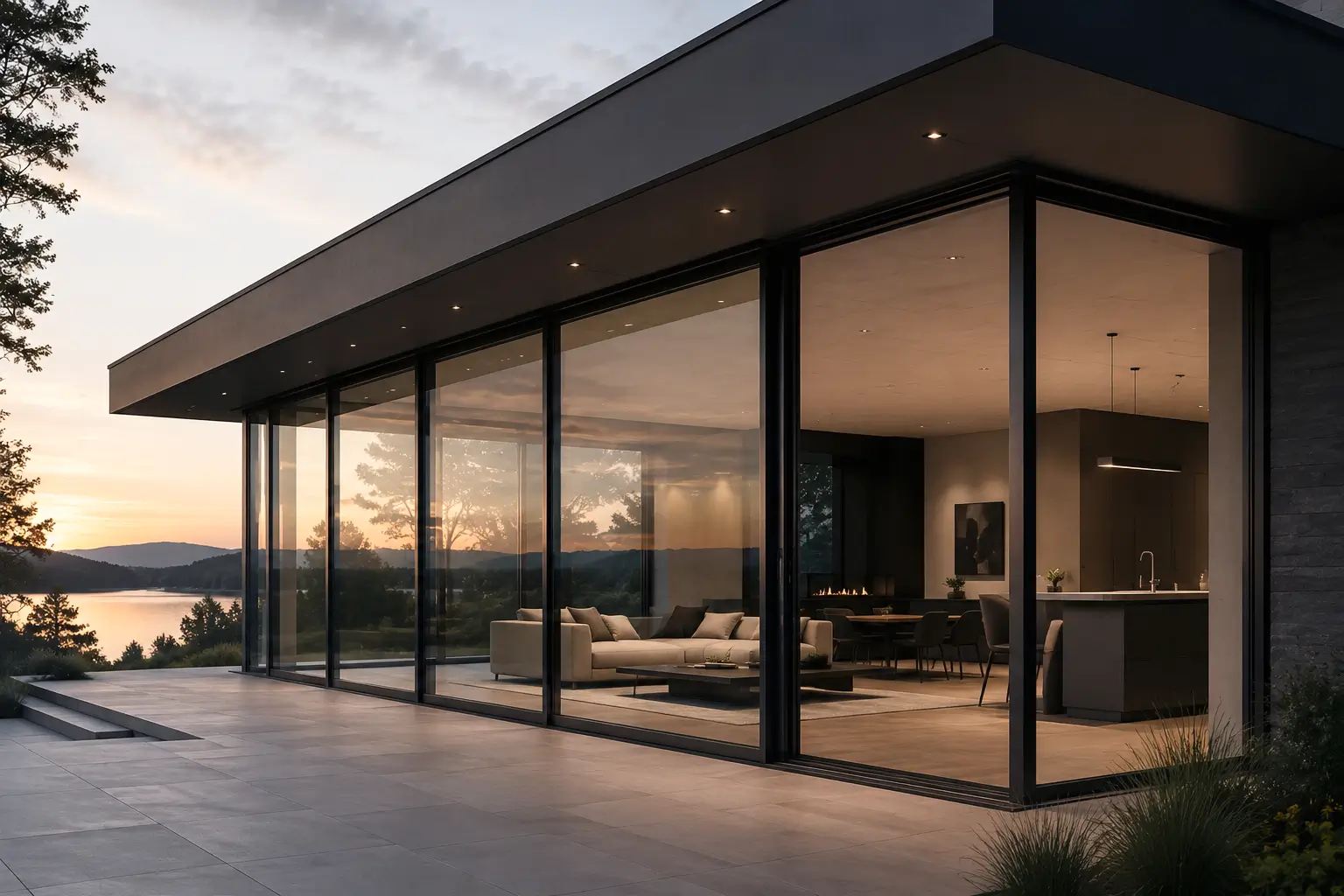
Aluminum windows: why they are becoming the standard for premium buildings
Wood and plastic have their place. But where a window needs to last for decades without degradation, support large panes of glass, and keep its slim frame even after twenty winters, aluminum proves to be the material with the fewest compromises. Here is a comparison - minus the marketing, with technical reasons.
In the Czech Republic, the choice of window material was long decided mainly by price: plastic for the budget, wood for a traditional look, aluminium for architecture. This boundary is blurring. Today, insulated aluminium profiles achieve the same thermal parameters as wood and plastic, while offering something neither of them can match — a permanently stable frame regardless of weather, humidity, or years of operation.
Three materials, three different ageing curves
The key difference between aluminium, wood, and plastic is not how the window looks on the day of installation — today, all three materials can compete with each other in that regard. The difference lies in how they look after fifteen years of use.
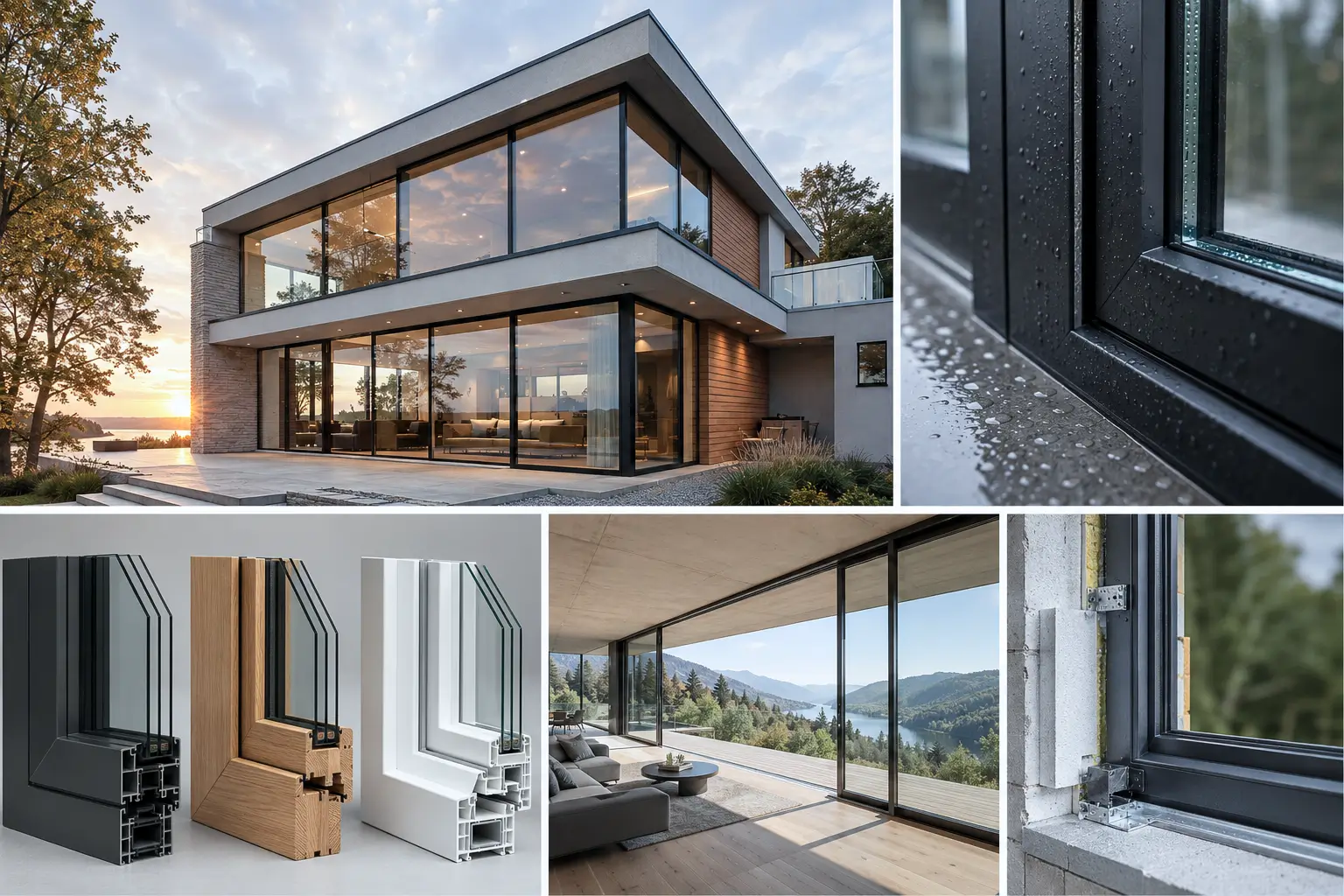
Wood reacts to humidity. It absorbs it and releases it again, changes dimensions, and without regular maintenance — paint or stain every 3–7 years — it begins to crack, lose joint tightness, and rot in exposed areas (window sills, bottom edges of sashes). Plastic (PVC) is more resistant to moisture, but it degrades under UV radiation: the profile gradually yellows, the surface becomes brittle, and with darker finishes, it also expands more due to heat, which causes warping in large formats. Aluminium does not corrode, does not rot, and UV radiation causes virtually no damage to its anodised or powder-coated surface (Qualicoat) — its dimensional stability remains the same in the first and the twentieth year.
Criterion | Aluminium | Wood | Plastic (PVC) |
|---|---|---|---|
Lifespan without major intervention | 40–50+ years | 25–40 years* | 20–30 years |
Regular surface maintenance | Not required | Paint / stain every 3–7 years | Minimal |
Dimensional stability (humidity, heat) | High | Low – swells, shrinks | Medium – thermal expansion |
UV resistance / surface ageing | High (Qualicoat) | Medium, depends on coating | Low – yellowing, embrittlement |
Load capacity for large-format glazing | High | Limited without reinforcement | Limited, steel reinforcement required |
Frame width / glass area ratio | Slimmest | Medium | Widest |
Fire behaviour | Non-combustible, does not melt | Combustible | Softens, releases combustion gases |
Recyclability | Fully recyclable | Limited (paints, glues) | Limited, more demanding process |
*The lifespan of wood strongly depends on the quality of the timber, treatment, and consistency of maintenance — without it, the real lifespan is significantly shortened.
Where wood reaches its limits
Wood has undeniable aesthetic value and good thermal-insulating properties as a raw material. The problem is not the wood itself, but what the outdoor environment does to it:
Maintenance is not optional. Neglected coating means moisture penetrates the grain, and from there it is a short path to rot and loss of tightness — especially on window sills and the bottom edges of sashes exposed to rain.
Reaction to humidity = material movement. Wood swells and shrinks with the seasons. With older wooden windows, this is noticeable in sashes that stick in the summer and develop gaps in the winter.
Load capacity for large panes. Modern architecture calls for increasingly large glazed areas. A wooden frame requires a larger cross-section to support them, which limits both the appearance and the proportion of the glazed area.
Where plastic (PVC) reaches its limits
Plastic primarily addressed affordability and lack of maintenance compared to wood — and in that, it fulfilled its role. However, its weaknesses become apparent precisely over the timeline for which buildings are designed today:
UV degradation. Years of sunlight make the profile brittle and, on darker decors, cause visible yellowing and loss of gloss — particularly noticeable on southern facades.
Thermal expansion. PVC expands significantly more than aluminium. With dark-coloured foils and longer profiles, this leads to warping in summer temperatures and visible bending of sashes across large surfaces.
Steel reinforcement as a crutch. In order for a plastic frame to bear larger panes, it requires internal steel reinforcement. The load capacity is then provided not by the plastic, but by the steel inside it — and the profile remains bulkier.
Limited repairability. A damaged or yellowed plastic profile practically cannot be repaired on the surface — the solution is replacing the part or the entire sash.
Thermal insulation is no longer an argument against aluminium
The most common objection to aluminium is: “aluminium conducts heat; the window will be cold.” That applied to profiles without a thermal break, which are virtually no longer used by quality manufacturers today. Modern aluminium profiles with an integrated thermal break insert (e.g. Schüco AWS 75 and AWS 90) achieve a total window Uw of below 0.8 W/m²K — parameters comparable to quality wood and plastic.
Today, the difference in insulation between materials is mainly determined by the glazing and installation, not the frame itself. We discussed more about the impact of glazing composition on the energy balance in the article Quadruple vs triple glazing: the real difference in heating costs.
Where aluminium shows its main advantage
The high strength-to-weight ratio of aluminium allows for significantly slimmer profiles than wood or plastic while maintaining the same or higher load capacity. This has two practical consequences: more daylight through the same structural opening and the ability to implement large-format glazing and sliding doors, for which both wood and plastic would require substantially bulkier (and therefore less luminous) structures. We described this in more detail in the article about large-format glazing.
Our position: Both wood and plastic have their place in certain projects — wood where consistent maintenance is taken for granted and the aesthetics of a solid frame are desired, plastic where the lowest purchase price is the deciding factor. However, for buildings planned with a view to decades ahead, large-format glazing, or facades with high demands on precision, we now recommend aluminium as the default choice — it is a material that retains its day-one parameters even after twenty years of operation.
In conclusion: why aluminium?
The question of “wood, plastic, or aluminium” used to be decided mainly by budget. Today, when houses are built with a lifespan of 40 or more years in mind and architecture demands ever-larger glazed areas, other criteria are coming to the forefront — dimensional stability, load capacity, and how the material looks and performs after fifteen winters, not just on the handover day. In these criteria, aluminium offers the fewest compromises of all three materials.
Send us your floor plan or just your idea of the size of the glazed areas. We will advise you on where the Schüco aluminium profile pays off the most and prepare a non-binding quotation.